I Used Creatine in My 30s. Then I Stopped.
Back then, it felt simple.
Train hard. Eat big. Add creatine. Get stronger.
Recovery wasn’t something I thought about. It just happened.
After 40, things changed.
Not dramatically. Not overnight. But enough to notice.
Recovery took longer. Sleep mattered more. Stress showed up in training sessions.
So the question became different.
Not: “Will this get me bigger?”
But: “Does this still make sense for how I train now?”
I Started Taking It Again
A couple of months ago, I decided to reintroduce creatine.
No loading phase.
No complicated protocol.
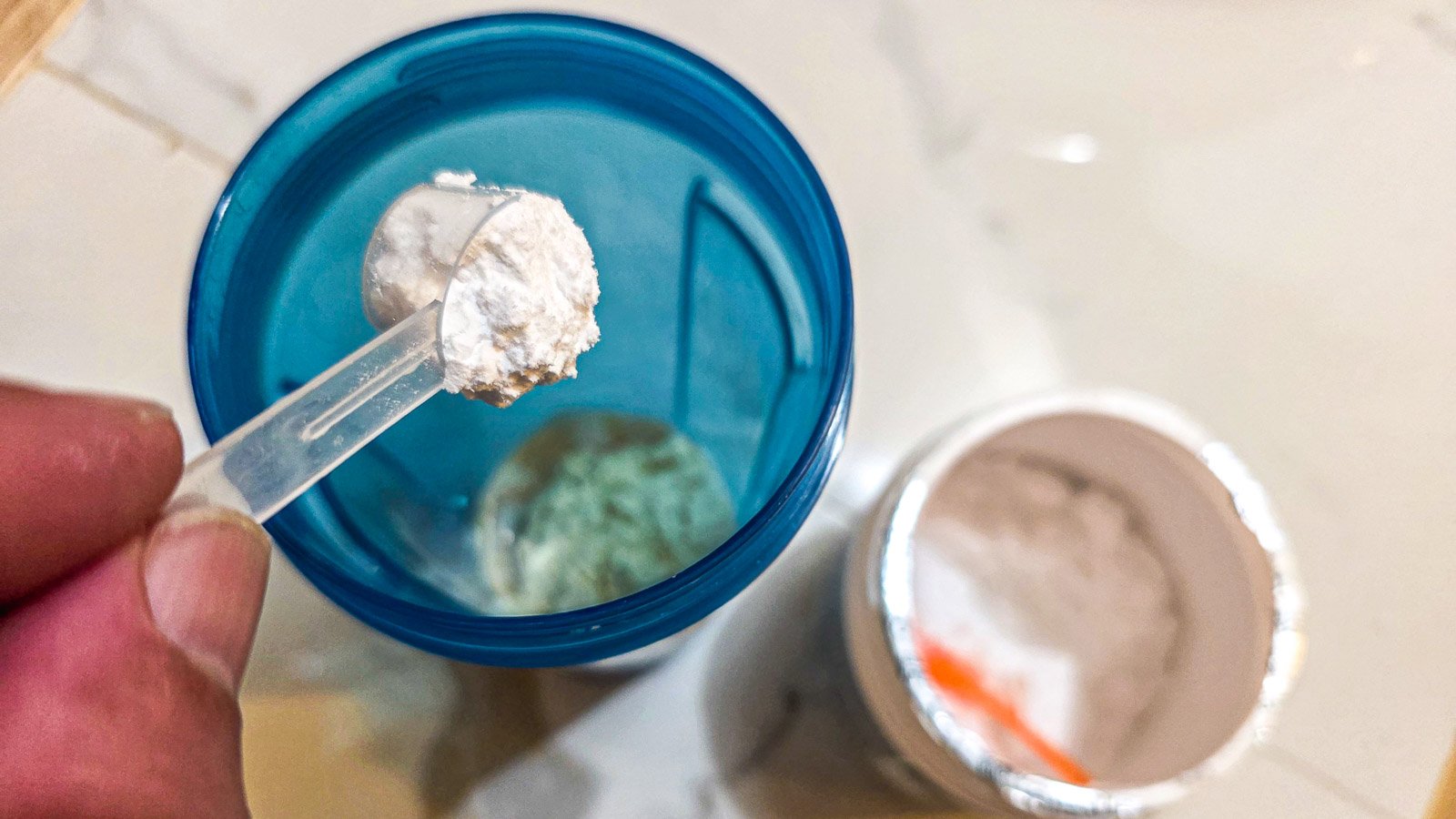
Just 5 grams per day, mixed into my protein shake or collagen powder.
Here’s what happened:
- My bodyweight increased by about 3 kg.
- My lifts went up roughly 30% across my main movements.
- I look fuller.
- I have noticeably more stamina during workouts.
- I recover better between sets.
Yes, some of that weight gain is due to water retention within the muscle.
But here’s the important part:
I don’t regret it.
The added weight doesn’t feel like “bloat.” It feels like capacity.
At this stage of life, I care more about strength and performance than keeping the scale artificially low, by starving myself.
And I plan to keep taking it.
First, Let’s Remove the Drama
Creatine is not a miracle.
It’s also not dangerous for healthy adults.
It’s one of the most researched supplements in sports nutrition. And unlike most things in this industry, the research has held up over time.
What it does is simple:
It helps regenerate ATP — the short-burst energy system used during heavy lifting.
In practical terms:
- You might squeeze out an extra rep.
- You may lift heavier.
- You may feel stronger from set to set.
It doesn’t melt fat.
It doesn’t spike testosterone.
It doesn’t replace discipline.
It supports effort.
The Difference After 40
When you’re younger, you can brute-force progress.
After 40, you can’t.
You have to manage fatigue.
You have to respect recovery.
You have to train intelligently.
For me, creatine now feels less about growth and more about preservation.
It helps me maintain output.
And maintaining output is everything when you’re trying to stay strong into your 50s
The Kidney Myth (Still Alive)
This one never goes away.
In healthy individuals with normal kidney function, moderate creatine use (3–5g daily) has consistently been shown to be safe.
Yes, blood creatinine may rise slightly, but that’s not the same as kidney damage.
If someone has diagnosed kidney disease, that’s a medical conversation.
But for healthy men over 40 who lift? There’s no solid evidence that standard creatine use is harmful.
Loading Phase? I Skip It.
I don’t load.
20 grams per day for a week isn’t necessary.
Five grams daily works. It just takes a little longer to fully saturate.
After 40, I prefer consistency over aggressive protocols.
What You Should Expect
If creatine works for you, expect:
- Increased strength
- Slight weight gain
- Fuller muscles
- Better training stamina
You should not expect:
- A dramatic visual transformation in 30 days
- A replacement for proper nutrition
- A fix for poor sleep
Creatine amplifies structure.
It doesn’t fix chaos.
Who It Makes Sense For
- You lift consistently (3–4x per week)
- You train with progressive overload
- You’re focused on preserving lean mass
- You’re not afraid of a slight increase on the scale
Who Probably Doesn’t Need It
- You train randomly
- You’re mostly doing light cardio
- You’re not eating enough protein
- You’re still chasing shortcuts
Supplements only make sense once the foundation is in place.
My Position Now
In my 30s, creatine felt like part of the growth phase.
Now it feels like part of the long game.
I take 5 grams daily.
I mix it with protein.
My weight is up.
My strength is up.
My stamina is up.
At this stage, that’s a trade-off I’m comfortable with.
Because staying strong at 55 is worth far more than chasing a lighter number on the scale.
Bottom Line
Creatine isn’t gym hype.
But it’s not magic either.
If your training is structured and your nutrition is solid, it can be one of the few supplements that consistently delivers, without drama.
For me, it’s back in.
And this time, it’s staying.
FAQ: Creatine After 40
Is creatine safe after 40?
For healthy adults with normal kidney function, creatine at 3–5 grams per day is generally considered safe based on long-term research. If you have diagnosed kidney disease or medical conditions, consult a healthcare professional first.
How much creatine should a man over 40 take?
A simple approach is 5 grams daily. There’s no need for a loading phase. Consistency matters more than aggressive dosing.
Does creatine cause weight gain after 40?
Yes, it can. I gained around 3 kg after reintroducing creatine. Most of this is increased water inside the muscle, not fat gain. The scale may go up, but performance usually improves as well.
Is creatine worth it if I only train casually?
If your training is inconsistent or mostly light cardio, creatine probably won’t make much difference. It works best when combined with structured strength training and adequate protein intake.
Should I stop creatine if my blood creatinine increases?
Creatine supplementation can slightly elevate blood creatinine levels without indicating kidney damage. However, any abnormal lab result should be discussed with your doctor for proper interpretation.
Is creatine necessary to build or maintain muscle after 40?
No. It’s not mandatory. But it can provide a small, consistent performance advantage that helps maintain strength and lean mass over time.